
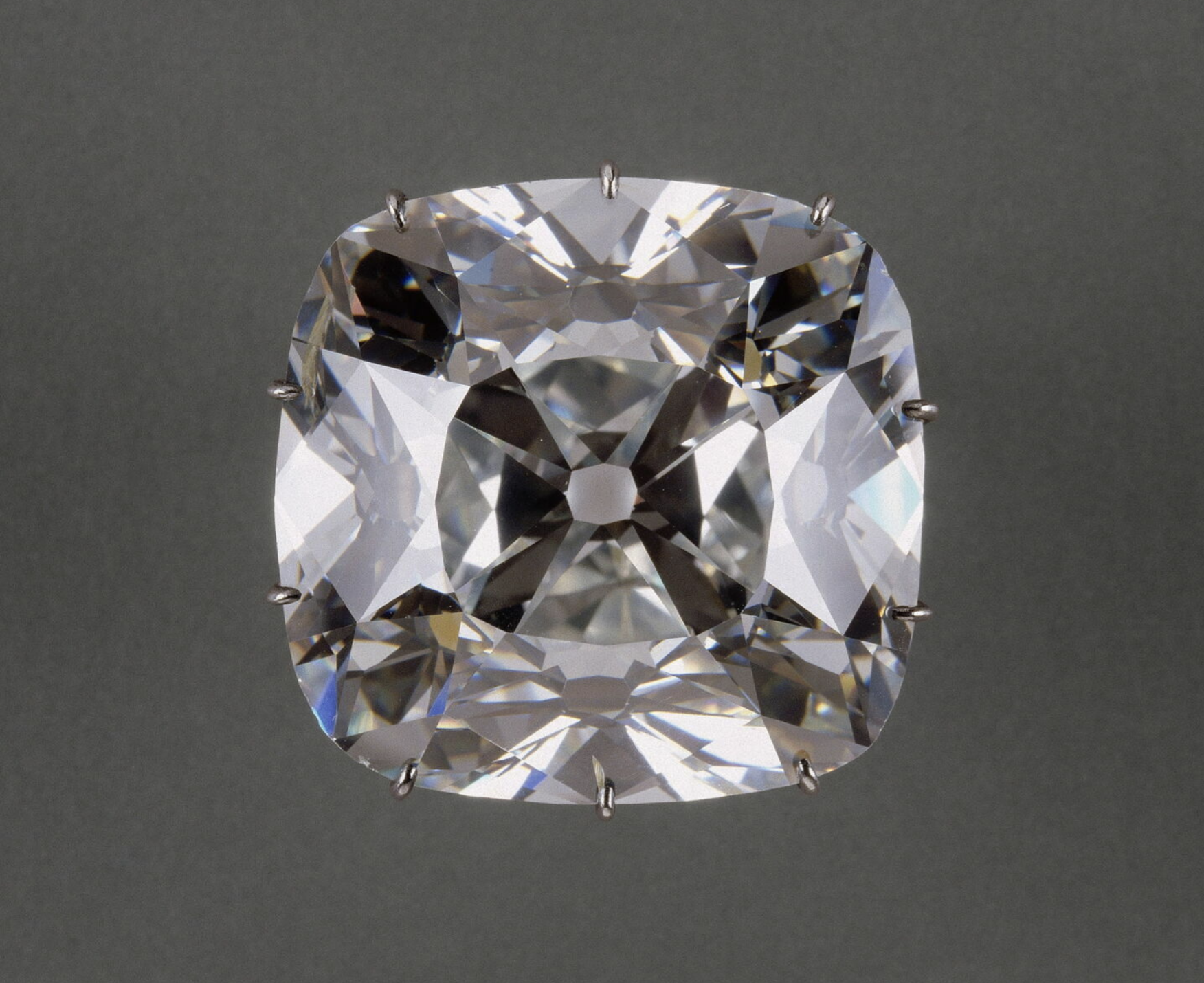
The Regent Diamond is one of the most famous and historically significant diamonds in the world. Known for its exceptional clarity, perfect cut, and royal provenance, this magnificent gem has passed through the hands of kings, emperors, and conquerors. Weighing an impressive 140.64 carats, the Regent Diamond is not only a symbol of wealth and power but also a witness to centuries of European history. Today, it resides in the Louvre Museum in Paris, where it continues to captivate visitors with its brilliance and storied past.
Discovery and Early History
The Regent Diamond was discovered in 1698 in the Kollur Mine in Golconda, India—a region renowned for producing some of the world’s most extraordinary diamonds. Originally weighing 410 carats in its rough form, the diamond was smuggled out of India by a slave who hid it inside a self-inflicted wound in his leg. He later struck a deal with an English sea captain, who promised him freedom and a share of the profits but instead betrayed him, stole the diamond, and sold it to a wealthy Indian merchant named Jamchand.
Eventually, the diamond made its way to Europe, where it was purchased in 1701 by Thomas Pitt, the British Governor of Madras. Pitt sent the rough diamond to London, where it was cut into a stunning 140.64-carat cushion-shaped brilliant over two years. The cutting process was so meticulous that it reportedly cost £5,000 (an enormous sum at the time) and reduced the diamond’s weight by nearly 70%. Despite the loss in carats, the result was a diamond of unparalleled beauty, with perfect symmetry and exceptional fire.
The Diamond’s Royal Connections
In 1717, Thomas Pitt sold the diamond to Philippe II, Duke of Orléans, who was then the Regent of France (ruling on behalf of the young King Louis XV). The gem was henceforth known as “Le Régent” (The Regent Diamond) in honor of its royal owner. It was set into the crown of Louis XV for his coronation in 1722, symbolizing the monarchy’s grandeur.
Later, Queen Marie Antoinette wore the Regent Diamond in a variety of settings, including a spectacular three-tiered jeweled hair ornament. However, during the French Revolution (1789–1799), the diamond, along with other royal treasures, was seized by revolutionaries. In 1797, it was pawned to fund Napoleon Bonaparte’s military campaigns before being reclaimed and set into the hilt of Napoleon’s sword.
The Regent Diamond in Modern Times
After Napoleon’s fall, the diamond was returned to the French Crown Jewels. It adorned the crowns of King Charles X and Napoleon III before being permanently moved to the Louvre Museum in 1887, where it remains on display today.
Why Is the Regent Diamond So Valuable?
Several factors contribute to the Regent Diamond’s immense value:
- Exceptional Quality – The diamond is a D-color (completely colorless) Type IIa diamond, the purest and rarest category. Its flawless clarity and perfect cut enhance its brilliance.
- Historical Significance – Owned by kings, queens, and emperors, the diamond is intertwined with European history.
- Size – At 140.64 carats, it is one of the largest flawless diamonds in existence.
- Provenance – Its journey from India to France adds to its mystique.
While its exact value is difficult to determine, experts estimate it could be worth over $100 million today, making it one of the most expensive diamonds in history.
Conclusion
The Regent Diamond is more than just a precious stone—it is a relic of history, a symbol of power, and a masterpiece of nature. From its dramatic discovery in India to its role in European royalty, this diamond has fascinated generations. Today, as it shines in the Louvre, it continues to remind us of the timeless allure of the world’s greatest treasures.