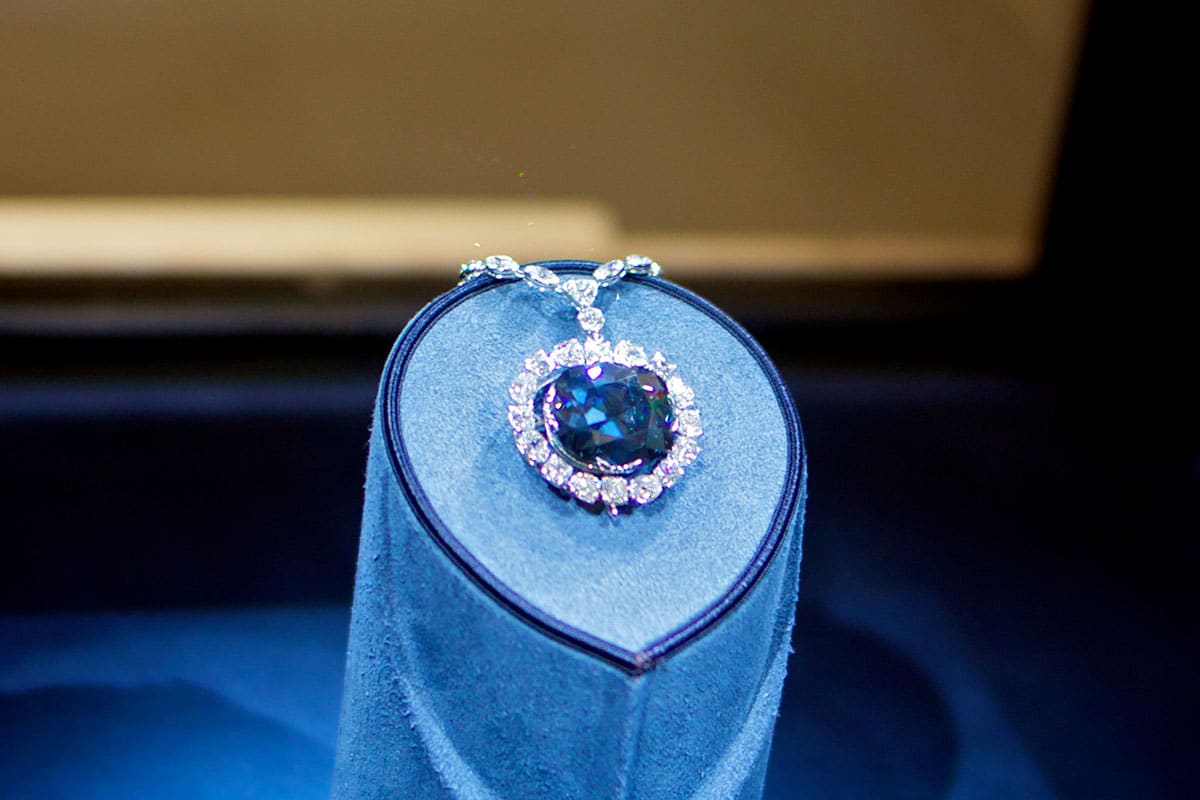
The Hope Diamond is one of the most famous and enigmatic gemstones in the world. With its deep blue hue, remarkable size, and storied past, this diamond has captivated historians, gemologists, and the general public for centuries. Weighing an impressive 45.52 carats, the Hope Diamond is not only renowned for its beauty but also for the legends of curses and misfortune that surround it. Currently housed in the Smithsonian Institution’s National Museum of Natural History in Washington, D.C., the diamond continues to draw millions of visitors each year.
This article explores the fascinating history, scientific properties, and cultural impact of the Hope Diamond, delving into its origins, ownership, and the myths that have made it a subject of endless fascination.
The Origins of the Hope Diamond
Discovery in India
The Hope Diamond’s story begins in the Golconda mines of India, which were historically known for producing some of the world’s finest diamonds. Many experts believe that the Hope Diamond was originally part of a larger stone, the Tavernier Blue, named after French gem merchant Jean-Baptiste Tavernier, who acquired it in the mid-17th century.
Tavernier described the diamond as a crudely cut triangular stone weighing approximately 115 carats. He sold it to King Louis XIV of France in 1668, where it was recut into a 67.125-carat gem known as the “French Blue” (or Le Bleu de France).
The Diamond in the French Royal Court
Under Louis XIV’s ownership, the French Blue became a centerpiece of the French Crown Jewels. It was set in gold and worn on ceremonial occasions. The diamond was later passed down to Louis XV and Louis XVI, both of whom admired its brilliance. However, during the French Revolution in 1792, the French Blue was stolen along with other royal jewels.
For decades, the diamond’s whereabouts remained unknown until a strikingly similar (but smaller) blue diamond resurfaced in London in 1812. Many historians believe that this stone was the recut French Blue, now weighing 45.52 carats.
The Hope Diamond’s Journey Through Ownership
Henry Philip Hope and the Diamond’s Namesake
The diamond’s modern name comes from Henry Philip Hope, a British banking heir and gem collector who acquired it in the early 19th century. Hope had the diamond set into a pendant, and its stunning blue color became widely celebrated. After his death in 1839, the diamond passed through various family members before being sold to pay off debts.
Changing Hands Across Continents
Over the next several decades, the Hope Diamond changed hands multiple times:
- Pierre Cartier – The French jeweler purchased the diamond in 1910 and later sold it to American socialite Evalyn Walsh McLean.
- Evalyn Walsh McLean – A wealthy heiress, McLean wore the diamond frequently, often flaunting it at parties. Despite rumors of a curse, she dismissed them as superstition. However, her life was marred by tragedy, including the deaths of her son and husband, fueling the curse legend.
- Harry Winston – After McLean’s death in 1947, jeweler Harry Winston acquired the diamond. In 1958, he donated it to the Smithsonian Institution, where it remains today.
The Science Behind the Hope Diamond
Physical and Chemical Properties
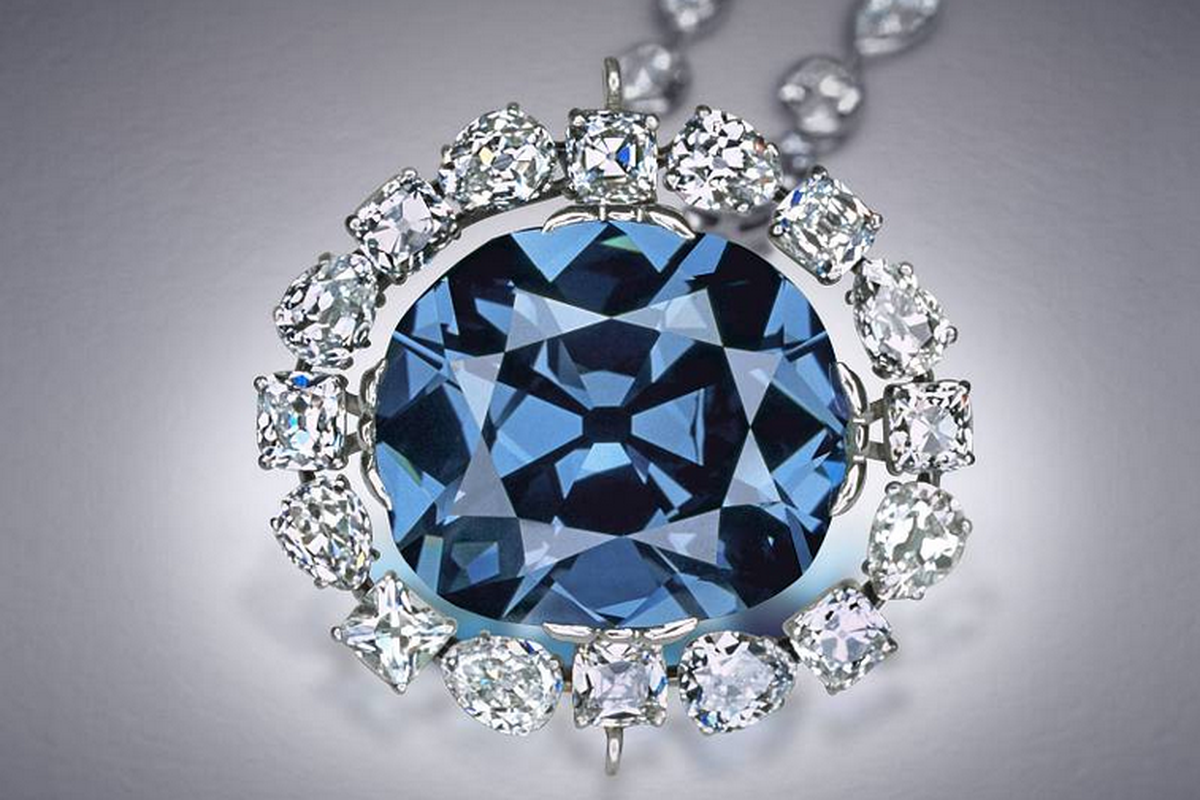
The Hope Diamond is classified as a type IIb diamond, meaning it contains trace amounts of boron, which gives it its distinctive blue color. Some key characteristics include:
- Color: Deep blue with slight grayish undertones.
- Cut: Cushion antique brilliant with 58 facets.
- Fluorescence: Exhibits a strong red phosphorescence under UV light, a rare trait in diamonds.
The Curse: Myth or Reality?
One of the most enduring aspects of the Hope Diamond is the legend of its curse. Stories claim that misfortune befell many of its owners, including:
- Tavernier: Allegedly died in poverty (though historical records suggest he died wealthy).
- Marie Antoinette and Louis XVI: Both were executed during the French Revolution.
- Evalyn McLean: Suffered multiple family tragedies.
However, skeptics argue that the curse was largely sensationalized by the media and that many owners lived prosperous lives.
The Hope Diamond Today
Since its donation to the Smithsonian in 1958, the Hope Diamond has been one of the museum’s most prized exhibits. It is displayed in a specially designed setting, surrounded by white diamonds to enhance its brilliance.
Cultural Impact and Legacy
The Hope Diamond has inspired countless books, documentaries, and films. Its allure lies not only in its beauty but also in the mystery and legend that surround it. Whether cursed or simply a magnificent gem, the Hope Diamond remains an enduring symbol of luxury, power, and intrigue.
Conclusion
The Hope Diamond is more than just a precious stone—it is a piece of history that has passed through royal courts, survived revolutions, and fascinated generations. From its origins in India to its current home in the Smithsonian, the diamond’s journey is as captivating as its deep blue glow. While the truth behind its supposed curse may never be fully known, one thing is certain: the Hope Diamond will continue to mesmerize and mystify for centuries to come.